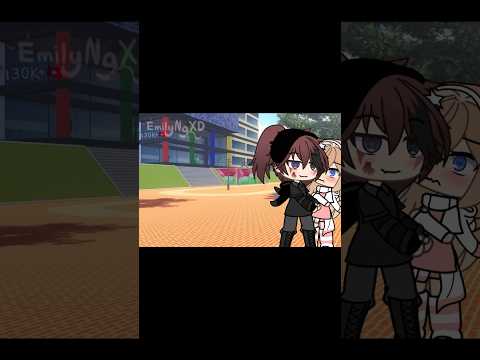
EmilyNgxD's Gacha Shorts are a reminder that a tiny fictional scene can still feel like a comic with a beginning, a turn and a punchline. The visual vocabulary comes from original characters, short captions, changes in expression, cuts between scenes and, according to creator information supplied for this feature, a combination of personal storytelling and drawing outside the Gacha editor. For small businesses considering video, the instructive subject is not the creator's personal life or a guaranteed route to millions of views. It is the craft of making one moment readable on a phone, and the discipline of giving every short post a reason to exist.
What makes the story feel like a moving comic?
A comic strip uses selected frames to decide what the reader sees and when. A short animation does something related, but timing is built into the playback: a new expression appears, the scene cuts, a caption arrives, or a reaction lasts longer than expected. The viewer's understanding depends on those choices. In Gacha edits, recurring characters may make the opening instantly familiar to an existing fan, while a new viewer still needs enough information to follow the scene. That balance is a craft decision rather than an automatic feature of the software.
The creator is reported to write her own plots and also draw original artwork alongside Gacha production. This gives a useful way to discuss authorship. Character creators provide poses and assets, and tools can simplify movement, but they do not supply all the narrative choices in a specific original story. At the same time, the available public descriptions do not prove how every animation was assembled. It is more accurate to recognise storytelling, drawing and editing as complementary abilities than to attribute every successful effect to a named application.
EmilyNgxD's archive includes emotional mini-stories, funny trends, reaction formats and Roblox material. A short sequence can work because viewers recognise a protagonist; another may rely on a visual misunderstanding; a longer instalment may need captions to explain the stakes. These are different narrative problems, even if a similar cartoon style connects them. Anyone studying the format should distinguish a scene's actual plot from its trending audio or hashtag.
How the early serious stories differ from lighter later experiments
According to the creator background provided for this article, her early Gacha storytelling frequently involved bullied protagonists, family tensions, neglect and tragic themes. The public upload names Haven't I given enough?, Her unloved brother and I did nothing at all… reflect that dramatic register. A single scene may set up an unfair situation, then let the character's expression and final caption carry the emotional consequence. That is different from an upbeat trend edit, where the expectation may be inverted quickly for humour.
Later examples in the supplied channel material include Age changing…, outfit-related jokes, teleporting into a fictional movie, and short collaborations with familiar characters. The user supplied two directly addressable Shorts: Short example one, shared alongside early emotional story references, and Short example two, shared alongside an Age changing… sequence. Because automated video-page checking was inconclusive, the exact video title associated with each URL should be confirmed on the original player; this article does not invent a shot-by-shot analysis of footage it has not directly inspected.
The significant stylistic contrast is between a scene asking viewers to care about an unfair predicament and one asking viewers to enjoy a playful transformation or surprise. Neither is inherently easier to make. Sad scenes can become melodramatic if the motive is unclear; jokes fail if the viewer cannot identify the set-up. In both cases, the creator has to decide which facts to reveal, what to cut and where the change in emotion should occur.
Real audience figures need the right labels and dates
The 15 October 2026 YouTube channel snapshot supplied for EmilyNgxD showed approximately 268,000 subscribers and a rounded '1k videos'. Other supplied lists showed the popular full-length story I did nothing at all… at approximately 111,000 views, a trend-based short In the “perfect” world at around 477,000, and a fake-collaboration Short around one million. Those are time-bound public display figures, not performance analytics or forecasts.
The creator research also includes a user report of a Short achieving 3.2 million views and 209,000 likes. That is a striking reported example, but the screenshots currently available do not conclusively associate both metrics with one verified video URL. This is therefore a user-reported claim awaiting independent per-video confirmation, not a verified figure to use as the headline of a case study. Similarly, copied YouTube interface fragments contain numbers such as 254k and 209k without preserved metric labels; those must not be silently reinterpreted as likes or views.
The user further reports that the channel has passed the 100,000-subscriber creator milestone and obtained the corresponding YouTube recognition. Crossing a threshold and physically receiving a Creator Award are separate facts, so the reported award should not be presented as independently certified possession until a clear creator statement or image establishes it. None of these milestones proves that a particular editing trick caused the success. Popularity depends on factors not recoverable from the public list alone.
Recognisable characters create continuity across formats
A fictional character that returns over many uploads works a little like a recurring figure in newspaper comics. Clothing, expression and relationships tell an existing viewer which imagined world they have entered. The supplied channel lists include original-character reactions, family stories, friendships, a fictional romance and an ongoing Age changing… sequence. A short post may point back to an older episode, while a playlist lets the audience locate earlier parts. Even a creator with a substantial archive still has to make each individual scene intelligible enough for a newcomer.
What carries over to a business is the concept of recognisable presentation, not imitation of the creator's characters. A neighbourhood café could use a consistent illustrated sign for weekly menu explanations. A library could produce a series of brief 'where to find it' demonstrations with the same opening caption. In both cases, the audience needs accurate information, not a copy of an entertainment creator's fictional universe. A recurring staff presenter or mascot is helpful only if the advice changes in a useful way each week.
Familiarity should not become an excuse to overstate access to the original creator. Fictional relationships on screen and collaborations online are public creative output, not evidence of private relationships. That distinction is especially important when writing about a young creator.
Fake collaborations and credited joint uploads are not the same
EmilyNgxD's 2026 playlists included a Fake collab with mee collection, and the supplied Shorts list includes several fake-collaboration trends. This is a participatory format in which a creator builds a response or imagined partner scene; the label itself does not prove a formal joint production. Separately, a public Collaborations area showed some videos co-credited with WyattNewxD and others. When describing a creator's network, those two forms must not be mixed up.
The difference matters commercially as well. An independent shop could invite followers to respond creatively to an original prompt, but it should not imply those people are paid partners or official brand endorsers. A jointly produced advertisement calls for agreed responsibilities, asset permissions, accurate credits and clarity about commercial relationships. A tagged handle is not a licence to reuse that account's artwork, voice or identity in marketing.
The supplied channel page also featured fan-art shares and community messages. Those posts demonstrate public interaction and should be credited as other people's work where appropriate. Copying an image from a fan's post into a commercial promotion without permission undermines precisely the creative community a business might hope to learn from.
Translate the pacing into three useful local-business shorts
Consider a three-part pilot for a real neighbourhood organisation. The first post answers one question in its opening caption: 'Where can I return this book?' Show the relevant desk or return point, then end with a readable time or direction. The second explains a small process, such as how a bakery labels allergen information, without compressing away important caveats. The third is a genuine behind-the-scenes moment showing a craftsperson's work with their permission. The common thread is a clear question, visual evidence and one reliable next step.
A simple storyboard helps. In panel one, identify the object or problem; in panel two, show the relevant action; in panel three, state the result or where to find fuller guidance. Test captions at mobile width so key details are not covered by interface icons. Preview the video without sound to check that essential information remains accessible. If music is used, confirm appropriate rights; a platform trend does not automatically grant commercial music clearance in every context.
Measure whether the intended viewer can act on the information. Did the clip answer a frequently asked question? Could a customer locate the correct link? Did staff have to clarify a misleading detail? Compare these outcomes with the effort of producing the videos. A million entertainment views would not compensate for a wrong opening time on a business information post.
Credit the creator, choose source images carefully, and keep the lesson proportionate
The two public Shorts links above enable readers to explore original uploads without copying the audio or frames into this page. The bordered card now uses a YouTube-hosted video-preview thumbnail linked to the specific Short supplied for this article, rather than repeating the channel avatar used elsewhere. This image is not a claim to own the original artwork or a substitute for verifying platform image-use terms and real-browser rendering.
For someone learning to edit, EmilyNgxD provides a case worth studying: creator-reported original scripts and drawings, serious and comic fictional themes, returning characters, short visual changes and varied public collaborations. The useful takeaway is not that every creator should seek 3.2 million views, or that all fast cuts are effective. It is that concise animated storytelling depends on knowing the character, selecting the turning point and respecting the audience's understanding. See the official EmilyNgxD channel for the changing catalogue and this site's advertising disclosure for its association with the project.
This feature is about a business/project we are associated with.