Updated October 2026. The British Heart Foundation (BHF) has named 87 shops and stores in the first phase of a wider plan to close around 150 retail locations across the UK. The important distinction is that an announced closure list is not evidence that every named branch has already shut its doors. The charity's original June 2026 statement described a proposed restructuring over two financial years; its published closure list identifies specific premises. Customers, donors, employees and volunteers should check a branch's current position rather than assume an undated headline means it closed immediately.
The announcement raises questions about local donation options, staff, charity income and the future of a familiar shopping street. The confirmed facts are significant, but they have limits: BHF has not published an individual closing date for every shop in that list, and its financial review does not establish that all charity retailers face the same pressures.
What BHF said in its original restructuring announcement
In June 2026, the charity said it planned to shut around 150 stores and shops across its estate during the following two financial years. It initially described around 90 closures by the end of March 2027 and the rest by March 2028. After the first locations were identified, reporting in July referred to a specific list of 87, with a further 63 locations potentially affected in the second stage. The difference between an early estimate of 'around 90' and an identified first tranche of 87 is a matter of stage and rounding, not evidence of 87 additional closures on top of 150.
The official statement attributes the review to increasing operating costs and changing shopping and donating habits. It also stresses that BHF as a charity remains financially sound overall. That distinction prevents readers from mistaking a review of particular retail premises for the collapse of the national charity.
Where is the official list of 87 shops?
The clearest starting point is the BHF-hosted three-page shop and store list. It names premises across England, Scotland and Wales and includes both conventional charity shops and larger furniture or electrical Home Stores. Examples on the first page include Armley, Aberdare, Alfreton, Abingdon, Ashbourne, Bath, Brighton Home Store, Camden, Crawley Home Store, Dumfries and Elgin. Those names are examples from the document, not a substitute for checking its full address list.
Local reports may provide more recent dates or staff information for a particular branch, but should be cross-checked with BHF communications. A listing for future closure does not tell a donor whether the shop is accepting goods today, and a national list should not be presented as a live store finder.
What happens between the announcement and a shop's last day?
BHF explicitly said supporters could continue to donate and shop as usual while affected premises remained open. That is more helpful than a blanket instruction to stop using an earmarked store. The practical position can change by location as managers arrange trading, donations, stock movement and closure. For current opening hours, consult the official BHF shop finder, then confirm directly when making a special journey with large or valuable items.
Do not infer that all shops named in July necessarily closed in July. The wider timetable stretches into March 2028, and the actual closing date is a branch-level fact. Consumers should rely on the most recently dated first-party information rather than a static news archive.
Why rising operating costs matter to a charity retailer
Every charity shop has commercial expenses, even when much stock is donated and volunteers contribute time. Rent, utility bills, paid staff, premises maintenance, handling donated goods and moving furniture can all affect the income a branch passes to charitable work. A national organisation may keep a substantial retail estate while deciding that particular premises no longer provide a sustainable contribution.
BHF's statement gives rising costs and changing customer behaviour as the broad reasons for its review; it does not release individual branch profit-and-loss accounts. That means nobody can responsibly assign a specific shop's closure to a single rent rise, local competitor or online platform without independent evidence. The review is a decision by this charity about this estate, not a quantified forecast for every charity shop.
How donated goods reach research funding
BHF says its shops and online sales raise funds for research into heart and circulatory diseases. Donations are valuable when they can be handled, presented and sold at a net benefit after costs. That is why a branch can receive a steady stream of donated items but still face challenges with commercial sustainability. It is also why a decision to close retail premises does not imply that BHF has abandoned collecting items or carrying out research.
After a closure, the charity says supporters may use neighbouring shops, donation points, home collection where offered and postal donation routes for eligible items. These services differ by area and product type; do not assume a furniture collection is automatically available everywhere. BHF's official donation guidance provides the current options.
Will all the affected staff and volunteers lose their roles?
The charity acknowledged the difficulty for colleagues and volunteers and referred to changes in central functions supporting the retail network. However, the original announcement did not provide a validated headcount of employees who would become redundant at each named store. It would be misleading to multiply 87 by an assumed staffing figure or assert that everyone volunteering in an affected branch has lost their placement.
Those directly affected should use BHF's internal communications and formal employment consultation processes for individual decisions. Public readers should distinguish the fact of proposed estate change from unverified claims about redundancies, redeployment or the exact timing of a particular person's role.
What donors should check before taking furniture or clothing
For ordinary clean, saleable clothing, check which nearby BHF shop currently accepts donations and any published restrictions. For furniture and electrical goods, confirm that the receiving site handles bulky items and that the charity offers collection in the relevant postcode. Large furniture may require additional safety checks; delivery arrangements can vary. Do not leave items outside a closed store or assume a local clothing shop can safely take an unwanted electrical appliance.
Where a branch is closing, staff may update what it can accept as its last trading date approaches. The retailer's current store finder and donation information are therefore more reliable for practical decisions than the national June statement alone.
What shoppers should know about gift cards, prices and stock
A branch on the closure list may remain open for ordinary shopping until its stated final trading day. Current opening times, sale arrangements and payment or gift-card terms should be checked through official BHF channels. A report about restructuring is not evidence that every store immediately launched a clearance sale, suspended returns or stopped accepting particular payment methods.
For purchases requiring a later delivery or collection, obtain the transaction terms and ask which branch or customer-service team handles after-sales matters. This is especially sensible for larger second-hand furniture purchases, where delivery and condition arrangements can differ from clothing purchases.
How does the 2026 plan compare with the charity's earlier direction?
The five-year comparison must be handled carefully. BHF's more recent published strategy describes a continuing nationwide shop network and investment in online retail, including eBay. That shows how physical shops and digital channels form parts of a broader fundraising model. It does not establish an independently comparable 2021 shop count or a calculated five-year closure rate. A meaningful 2021-to-2026 comparison would need two dated estate inventories using the same inclusion rules for charity shops, Home Stores and other retail formats.
If that information is not available, the honest statement is that the precise five-year numerical trend is not verified. It would not improve this article to invent an older baseline merely to produce a percentage. The solid 2026 evidence remains the announced plan and named first-stage locations.
Two common mistakes in reporting the 87 closures
First, 87 is the first named group, whereas approximately 150 is the intended overall scale; these should not be added together. Second, the wording 'to close' is not interchangeable with 'closed'. A branch may still be trading after appearing on the closure list. Other mistakes include presenting a proposal as completed, applying a local report to every part of the UK, or suggesting that one firm's premises review proves the entire charity sector is insolvent.
For reporting and local planning, preserve the announcement date, affected address and source of any later change. That is more useful than recycling an alarming headline without specifying a timetable.
Images and publication sources
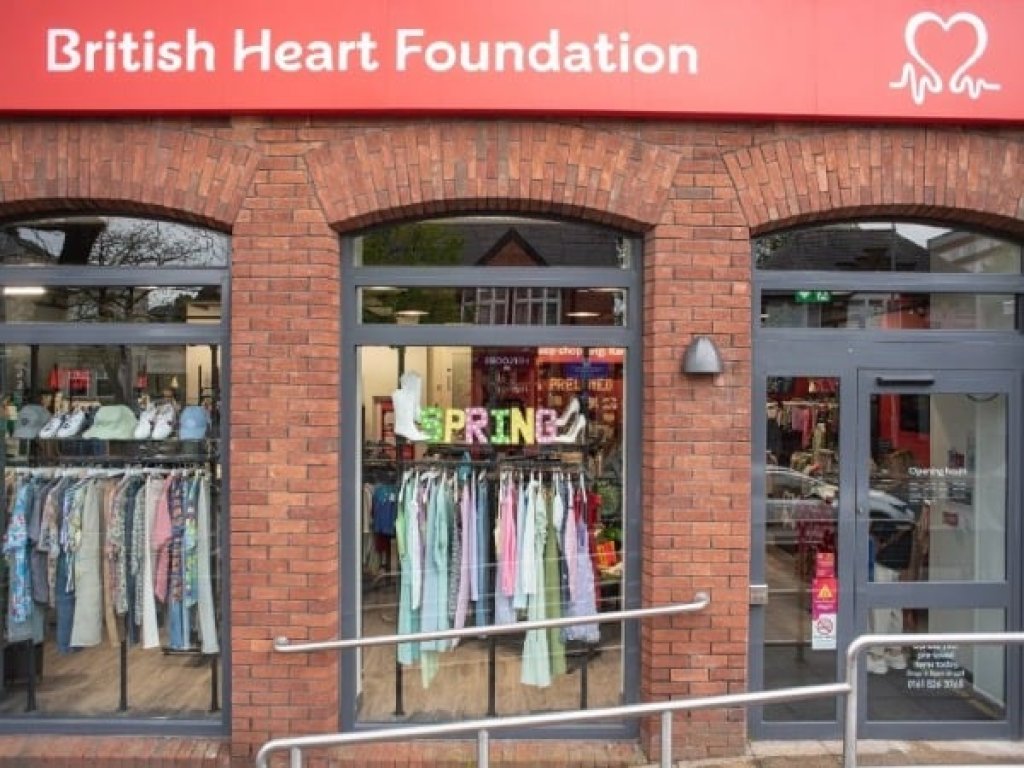
Visual link 1: BHF-hosted photograph of a charity high-street shop. Visual link 2: Charity Retail Association-hosted BHF shopfront photograph. These are links to source-hosted images, not assertions that either depicts a branch on the 87-store closure list or that Epic Creative has reproduction rights. The original sources for closure facts are BHF's June statement and its linked store PDF.

Conclusion: a real restructuring, but not 87 immediate shutdowns
BHF's named first group of 87 closures is part of its wider proposal to close about 150 shops over two financial years. The purpose, according to the charity, is to preserve the long-term sustainability of retail fundraising while it continues its research mission. For people who rely on a specific branch, the next step is a dated local check, not an assumption that every affected outlet already closed. The distinction between proposed, scheduled and completed matters to employees, donors, shoppers and the communities these shops serve.
Supplement: how to verify an affected BHF branch without confusing the closure timetable
The charity's closure document is a list of named premises, not a branch-by-branch diary of last trading dates. To report accurately on one community, first locate its exact shop name and address in the official PDF. Distinguish the clothing shop and Home Store if both exist in a town. Next inspect the current store finder and obtain a dated statement from the charity or store concerning opening, donation acceptance and any planned final day.
Record separate statuses: on first-phase list, announced closing date, final trading completed and removed from the official directory. Those are four different things and may be updated on different days. A local article should keep the original report date and explicitly note any later corrections, particularly where shoppers travel with large donated items.
For community impact, record what services the branch actually offered, such as clothing sales, furniture collection or volunteering, before speculating about what residents might lose. If donors can move to another location, verify its address and service availability. If no replacement is known, say so rather than promise one. The independent extra value here is a method for accurate local branch verification; it does not merely repeat the national financial reasons or inflate the closure total.
Evidence boundary: the 2026 proposal, first-wave list and individual closing dates are distinct sources of information. No unsupported staff-loss totals, automatic closure dates or claims about permission to republish linked images are made.
Frequently asked questions
Have 87 BHF charity shops already closed?
Not necessarily. The 87 are the first named group earmarked for closure in the wider 2026 restructuring. Actual final trading dates need local confirmation.
Does the 87 number replace the 150-store plan?
No. The charity proposed around 150 closures over two financial years; 87 were subsequently identified in the first phase.
Can I still donate to an affected branch?
BHF said shops could continue to trade and take donations while they remained open. Check current shop or donation-point information before travelling.
Where is the official list?
The original BHF restructuring announcement links to a BHF-hosted PDF naming the affected shops and addresses.